Nutrition · 8 min read
Eating for satiety: how to work with your appetite, not against it
A GLP-1 shrinks your appetite. That is the opportunity and the risk. Eating well on a smaller appetite is mostly about protein, fiber, and a little structure.
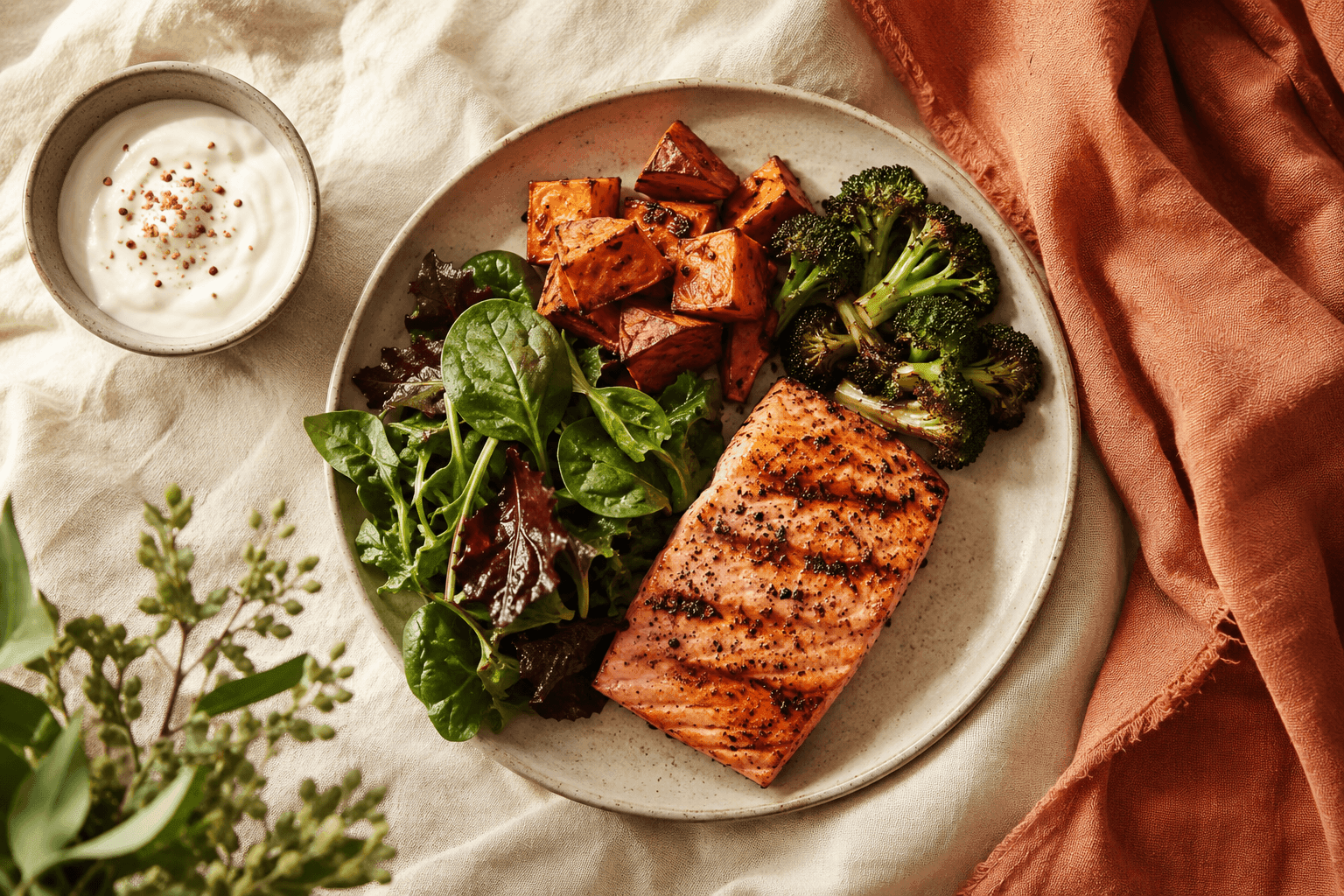
When a GLP-1 reduces how much you want to eat, every bite matters more. You are eating less food overall, so the quality of that food, and especially its protein content, becomes the difference between losing fat while staying strong and losing weight while losing muscle. Here is how to eat with your new appetite instead of fighting it.
Protein first, every meal
Rapid weight loss of any kind, including with GLP-1 medication, can cost you lean muscle along with fat. Eating enough protein is the single most effective dietary lever to protect muscle while you lose weight. A common target is roughly 0.6 to 0.8 grams of protein per pound of goal body weight per day, spread across meals. Lead each meal with the protein, since you may fill up before you finish the plate.
- Eggs, Greek yogurt, cottage cheese, and milk
- Chicken, turkey, fish, and lean beef
- Tofu, tempeh, edamame, lentils, and beans
- A protein shake on days when appetite is very low
Fiber and volume keep you full
Fiber-rich, water-rich foods add volume without many calories and help with the constipation that GLP-1 medications can cause. Vegetables, fruit, legumes, and whole grains do double duty here: they keep digestion moving and they stretch a small appetite into a satisfying meal.
Think of your plate as protein plus plants first. Starches and fats fill the remaining space, not the other way around.
Hydration is not optional
Reduced appetite often means reduced thirst, and many people drift toward mild dehydration without noticing. That can worsen fatigue, headaches, and constipation. Keep water visible and sip through the day, especially in the first weeks.
Eat enough to avoid gaps
Because you are eating less total food, it is easier to fall short on protein, vitamins, and minerals. This is the opposite of a crash diet mindset: you are not trying to eat as little as possible, you are trying to make a smaller amount of food count. Undereating badly can stall progress and cost you muscle and energy.
Add resistance training
Nutrition protects muscle; resistance training builds the case for keeping it. Even two short strength sessions a week signal your body to hold onto lean mass during weight loss. Combined with adequate protein, it is the most evidence-backed way to make sure the weight you lose is mostly fat.
If nausea hits
On days when nausea is present, smaller and blander tends to win: plain proteins, toast, rice, ginger, and cold or room-temperature foods, which can be easier than hot, strong-smelling meals. It usually passes as your body adjusts.
None of this needs to be perfect. Protein first, plants for volume, water through the day, and a couple of strength sessions a week will carry most of the result. Your provider can help you personalize the rest.
Compounded medications are prescribed at a licensed provider's discretion and are not FDA-approved. Prescription medications are filled by licensed compounding pharmacies across the US, and packaging will vary. Individual results vary. This page is not medical advice.